
De Meij: From Page to Stage
Tuesday, November 17, 2026, 7:30pm
Meyerson Symphony Center + Livestream
Jerry Junkin, Artistic Director & Conductor
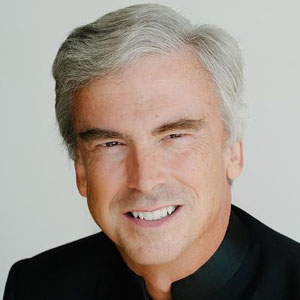
In his 31st season as Artistic Director and Conductor of the Dallas Winds, Jerry Junkin is recognized as one of the world’s most highly regarded wind conductors. He has served as Music Director and Conductor of the Hong Kong Wind Philharmonia since 2003, and Principal Guest Conductor of the Senzoku Gakuen College of Music Wind Symphony in Tokyo since 2007. Additionally, 2024-2025 marks his 36th year on the faculty of The University of Texas at Austin, where he holds the Vincent R. and Jane D. DiNino Chair for the Director of Bands. There, he also holds the title of University Distinguished Teaching Professor. Previously, he served on the faculties of both the University of Michigan and the University of South Florida. In addition to his responsibilities as Professor of Music and Conductor of the Texas Wind Ensemble, he serves as Head of the Division of Conducting and Ensembles and teaches courses in conducting and wind band literature. He is a recipient of multiple teaching awards, and students of Mr. Junkin hold major positions throughout the world.
Mr. Junkin is an enthusiastic advocate of public school music education, having conducted All-State bands and festivals in forty-eight states and on five continents. He spends his summers in residence at the Interlochen Arts Camp in Michigan, as well as appearing at major music festivals throughout the world.
Mr. Junkin has served as President of the Big XII Band Director’s Association and is a member of the Board of Directors of The John Philip Sousa Foundation, is Past-President of the American Bandmasters Association, and is Past President of the College Band Directors National Association. Regularly making guest appearances with ensembles such as the Tokyo Kosei Wind Orchestra and the Taipei Symphonic Winds, he continues to conduct throughout the United States in addition to multiple appearances in Japan, China, and Europe. In 2005, he was presented the Grainger Medallion by the International Percy Grainger Society in recognition of his championing of Grainger’s works, and he has received numerous career awards from Kappa Kappa Psi, Phi Beta Mu, and the Midwest Clinic, among others. Mr. Junkin is a Yamaha Master Educator.
Johan De Meij, Guest Composer

Dutch composer and conductor Johan de Meij (Voorburg, 1953) received his musical training at the Royal Conservatory of Music in The Hague. His award-winning oeuvre has garnered him international acclaim and have become permanent fixtures in the repertoire of renowned orchestras throughout the world, such as The Royal Concertgebouw Orchestra, The New York Philharmonic and The Tokyo Philharmonic. His Symphony No. 1 The Lord of the Rings was awarded the Sudler Composition Prize in Chicago and has been recorded by myriad ensembles including The London Symphony Orchestra and The North Netherlands Orchestra. He has written five symphonies including Symphony No. 2, The Big Apple and Symphony, No. 3 Planet Earth, and ten solo concertos, including T-Bone Concerto (trombone) and Casanova (cello). De Meij has conducted in prestigious venues such as the Philharmonie-Berlin, Carnegie Hall-New York, Suntory Hall-Tokyo and the Esplanade-Singapore. He received thirty-one awards and nominations, including 1st Prize at the International Composition Competition of Corciano – Italy for Casanova, the Dutch Wind Music Award, the Buma Classical Award and the Buma Wind Music Award.
Before devoting his time exclusively to composing and conducting, Johan de Meij enjoyed a successful professional career as a trombone and euphonium player, performing with the major orchestras and ensembles in The Netherlands. He currently maintains posts as principal guest conductor with The Simón Bolívar Youth Wind Orchestra, The New York Wind Symphony and The Kyushu Wind Orchestra in Fukuoka, Japan. Johan is founder and CEO of his own publishing company Amstel Music, established in 1989.
When not traveling, Johan divides his time between his Hudson Valley home and Manhattan & Amsterdam apartment with his wife and muse Dyan and their cats Lenny & Lulu.
Jens Lindemann, Trumpet
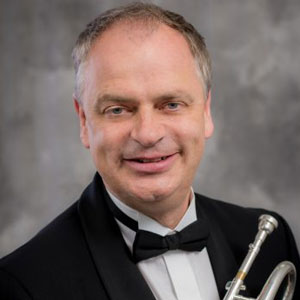
As the first classical brass soloist to ever receive the Order of Canada, Jens Lindemann is hailed as one of the most celebrated artists in his instrument’s history and was recently named “International Brass Personality of the Year” (Brass Herald). Jens has played both jazz and classical in every major concert venue in the world: from the Philharmonics of New York, Los Angeles, London, Berlin, Moscow and Tokyo to Carnegie Hall and even the Great Wall of China. His career has ranged from appearing internationally as an orchestral soloist, being featured at the 2010 Olympics for an audience of 2 billion people, national anthems at the Rose Bowl and for the San Francisco Giants on Memorial Day, performing at London’s ‘Last Night of the Proms’, recording with the Mormon Tabernacle Choir to playing lead trumpet with the renowned Canadian Brass and a solo Command Performance for Her Majesty Queen Elizabeth II. Jens has also won major awards ranging from Grammy and Juno nominations to winning the prestigious Echo Klassik in Germany and British Bandsman 2011 Solo CD of the year as well as receiving several honorary doctorates.
Classically trained at the renowned Juilliard School in New York and McGill University in Montreal, Jens’ proven ability to perform as a diverse artist places him at the front of a new generation of musicians. He has performed as soloist and recording artist with classical stars such as Sir Neville Marriner, Sir Angel Romero, Pinchas Zukerman, Doc Severinsen, Charles Dutoit, Gerard Schwarz, Eiji Oue, Bramwell Tovey, Kent Nagano, Lior Shambadal, Boris Brott and Jukka Pekka Saraste. Having recorded for BMG, EMI, CBC and the BBC, Jens is helping to redefine the idea of the concert artist by transcending stylistic genres and the very stereotype of his instrument by performing with “impeccable attacks, agility and amazing smoothness” (The Clarin, Buenos Aires).
A prodigious talent, Jens Lindemann performed as a soloist with orchestras and won accolades at numerous festivals while still in his teens. A prizewinner at numerous jazz and classical competitions including the prestigious ARD in Munich, Jens also placed first, by unanimous juries, at both the Prague and Ellsworth Smith (Florida) International Trumpet Competitions in 1992. Since then, he has performed solos with orchestras including, the London Symphony, Berlin, Philadelphia, Moscow, St. Petersburg, Beijing, Bayersicher Rundfunk, Buenos Aires Chamber, Atlanta, Washington, Seattle, Dallas, Detroit, Houston, Montreal, Toronto, National Arts Centre, Vancouver, Warsaw, Mexico City, Costa Rica, Bogota, Welsh Chamber, I Musici de Montreal, St. Louis, and Mostly Mozart at Lincoln Center.
Based in Los Angeles as Professor with High Distinction at UCLA, Jens is also director of the summer brass program at the Banff Centre in Canada. Jens Lindemann is an international Yamaha artist playing exclusively on 24K gold plated instruments.
Fanfare
7:15pm, Meyerson lobby
Ascent
James Quinn
Southern Methodist University Brass & Percussion
Charles Aguillon, Director of Athletic Bands, conductor
Program
American Prelude
Johan De Meij
Symphony No. 1, The Lord of the Rings
Johan De Meij
I. Gandalf (The Wizard)
II. Lothlorien (The Elvenwood)
III. Gollum (Sméagol)
IV. Journey in the Dark
a. The Mines of Moria
b. The Bridge at Khazad-Dûm
V. Hobbits
— INTERMISSION —
Leaves of Grass, for trumpet & wind orchestra
Johan De Meij
*World Premiere*
Inspired by the poems of Walt Whitman
I. Song of the Open Road
II. At Night at the Beach Alone
III. Sparkles of the Wheel
IV. Song for all Seas, all Ships
V. Manahatta
Jens Lindemann, soloist
(C trumpet, flugelhorn, B♭ trumpet, E♭ piccolo trumpet)
Dallas Winds Personnel
PICCOLO
Margaret Shin Fischer
FLUTE
Megan Pan, principal
Kathy Johnson
OBOE
Nathan Ingrim, principal
Kelly Diaz-Seitz
ENGLISH HORN
Aryn Mitchell
E♭ CLARINET
Jake Hale
B♭ CLARINET
Sharon Knox Deuby, concertmaster
Mary Druhan, associate principal
Ricky Reeves
Evan Schnurr
Kristen Thompson
Mark Arritola
Andre Canabou
Steven Robinson
Anthony Pineiro
BASS CLARINET
Mickey Owens
CONTRA CLARINET
Robin Owens
BASSOON
Marty Spake, principal
Jeff Strong
CONTRABASSOON
Leslie Massenburg
SOPRANO SAXOPHONE
Andrew Stine
ALTO SAXOPHONE
Andrew Stine, principal
David Lovrien
Chris Beaty
TENOR SAXOPHONE
Roy E. Allen
BARITONE SAXOPHONE
John Sweeden
TRUMPET
Daniel Kelly, co-principal
Raquel Samayoa, co-principal
James Sims
Richard Adams
Brian Mendez
Shaun Abraham
Jared Hunt
HORN
Eric Hessel, principal
Stephanie Baron
Sabrina Allard
Derek J. Wright
Jose Diaz
TROMBONE
Ryan Murray, principal
Natalie Mannix
Carlito Chavez
BASS TROMBONE
Barney McCollum
EUPHONIUM
Grant Jameson, principal
Donald Bruce
TUBA
Jason Wallace, principal
Juan Alonso
STRING BASS
John Hunter
HARP
Naoko Nakamura
PIANO
Ishan Wang
TIMPANI
Marvin Tyler, principal
PERCUSSION
Roland Muzquiz, principal
Joe Ferraro
Steve McDonald
Jon Lee
Brandon Kelly
Nate Collins
Remy Thomas
Staff
Michelle E. Hall – Executive Director
Jerry Junkin – Artistic Director & Conductor
Ramon Muzquiz – Concert Operations & Stage Manager
Jeremy Kondrat – Director of Education & Associate Conductor
Grace Lovrien – Executive Assistant
Michelle Shaheen – Development Coordinator
Anneliese Land – Marketing Coordinator
Lenore Ladwig Scott – Bookkeeper
Tim Andersen – Personnel Manager
Chrystal Stevens – Music Librarian
Stage Crew
Luke Davis
Josh Menefee
Rhrys Johnson
Dylan Hardy
Livestream
Adam Ellard – Director
Lenore Scott – Switch, Camera
Ciara Negley – Titles, Camera
Savannah Ekrut – Score Reader
David Lovrien – Title Design
Christopher Cook – Remote Cameras
Don Hazen – Video Systems Engineer, Camera
Scott Probst – Recording Engineer
Meyerson Technical Staff
Gerry Guerrero – Lighting Design/Technician
Michael Marbry – Audio Technician
Eyan Choate – Audio Technician
Cameron Smith – Lighting Technician
Sammy Turpin – A/V Technician
Lamar Livingston – Technical Director
Program Notes
Danzón No. 2 (1994)
Arturo Márquez (b. 1950), transcribed by Oliver Nickel
Arturo Márquez was born in Sonora, Mexico in 1950. Both his father and grandfather were musicians (performing both folk and mariachi music). He is one of the most well-known and widely performed living Mexican composers.
The danzón is a traditional dance originating in Cuba. It is descended from the contradanza or habanera, as the dance is known outside of Cuba. We may be able to hear hints of the most well-known habanera, that from Bizet’s Carmen, in the danzón. Early contradanzas and danzóns made their way to New Orleans, and their rhythm became part of the musical gumbo that led to jazz. The danzón also made its way to the Mexican state of Veracruz and eventually to Mexico City, where it was a prominent style heard at the famous club El Salón México, the namesake of the work by Copland.
Márquez has written nine Danzóns, but by far the most well-known is No. 2. In fact, Danzón No. 2 has become one of the most widely performed works of contemporary classical music in both its original orchestral version and the band transcription we will hear tonight. Its popularity is due to its infectious rhythms, beautifully memorable melodies, and a sense of joy that makes every listener grin from ear to ear.
(Bret Newton)
La Fiesta Mexicana: A Mexican Folk Song Symphony
H. Owen Reed (1910 – 2014)
In Reed’s long and productive life, he worked with and studied with many of the most important figures in American music, including Howard Hanson, Aaron Copland, Leonard Bernstein, Roy Harris, and Arnold Schoenberg. He was the longtime professor of composition at Michigan State University, and while there he taught many students who would go on to be influential composers in their own right, such as David Maslanka, David Gillingham, and Adolphus Hailstork.
After World War II, Reed began an ethnomusicological study of music from the Americas. This included musical styles of Native Americans, Mexicans, Anglo Americans, and African Americans. Through a Guggenheim Fellowship, he was able to travel to Mexico for six months and document the musical culture there. The music he heard on that trip became the foundation for his most well-known work, La Fiesta Mexicana. This piece, subtitled “A Mexican Folk Song Symphony,” blends the sounds of imagined Aztec ceremonies, Roman Catholic masses, and street musicians playing mariachi music. The work is in three movements.
- Prelude and Aztec Dance
The piece opens with the pealing of bells and the blaring of Horns. This signals the beginning of the fiesta. The huge hits on the bass drum are representative of the sonic booms of fireworks. The music dies down, and the festival-goers meander into the town plaza. Listen closely for the sound of the Contrabass Clarinet in the first soloistic passage ever written for that instrument in a band composition. The music slowly waxes and wanes, the bells fade away, and suddenly a mariachi band starts playing in the distance. The party is in full swing, and the parade is full of colors and life. An Aztec dance troupe follows the mariachi band. Their performance builds to a frenzy, and the movement ends with the crashing of a gong. - Mass
The bells call again. All festivals have their beginnings in the church calendar. This one is no exception. All gather within the walls of the cathedral to worship. - Carnival
The party is back on. The streets are buzzing with commotion and music is everywhere. The circus is in town to entertain one and all. Mariachis play on every street corner. The world is a fiesta.
(Bret Newton)
Sinfonía Nómada (Nomadic Symphony)
Arturo Márquez (b. 1950)
Sinfonía Nómada (Nomadic Symphony) is a work centered on migration, approached not as a single narrative but as a series of perspectives. Across its three movements, the symphony moves from the natural world to the human experience, ultimately confronting one of the most urgent issues of our time: immigration. Framing the entire work is a recurring batucada-inspired rhythmic language that opens each movement and returns with heightened meaning in the finale, where its character is revealed in full.
The first movement, Marcha Natura: Pole to Pole (Natural March), reflects the vast cycles of natural migration that define life on earth. Its steady, processional character evokes the movement of species across great distances: caribou traversing the tundra, salmon returning upstream to the waters of their birth, and the Arctic tern’s extraordinary annual journey between the poles. The music unfolds with patience and inevitability, suggesting motion not as urgency, but as necessitvy, embedded in the rhythms of the natural world.
The second movement, Faro Verde: Sahuaro (Green Lighthouse), draws inspiration from the poem Saguaros by Salvadoran poet Javier Zamora. In Saguaros, Javier reflects on his journey on foot from El Salvador through the Sonoran Desert into the United States. Undertaken in an effort to be reunited with his parents, the journey took two months, with the poem set at the moment of his arrival at the U.S. border. In the Sonoran Desert, the composer’s birthplace, the towering saguaro cactus stands as both witness and guide. These behemoths grow slowly, approximately one meter every sixty years, with some living for centuries and reaching heights of over sixty feet. Márquez translates this imagery into sound through a gradual unfolding of musical material: a long crescendo shaped by shifting meters that mirrors the slow growth of the saguaro. This rise is later reversed, the music fading as if the landscape itself is falling away. This expansion and decay can be heard as the life cycle of the cactus, a reflection on environmental loss, or perhaps the saguaros serving as sentinels, rising before by Javier Zamora, only to recede as he leaves them behind him.
The final movement, Looking South, addresses contemporary human migration directly. Márquez, himself an immigrant during his studies in California, has described this subject as inescapable: “How could I write anything else?” Yet rather than framing the movement in present-day rhetoric, he turns to the words of William Shakespeare, written over four centuries ago. The movement is structured around “The Stranger’s Case” speech from The Book of Sir Thomas More, in which Sir Thomas asks his listeners to imagine themselves as the very strangers they seek to expel. Though the text is never spoken, it is embedded musically, first in the trumpets and later in the clarinets. The final word of the speech, “inhumanity,” is revealed as the fundamental motive, not only of the movement, but of the batucada drumming that frames the entire symphony. Here, in the third movement, the drumming is accompanied by whistles. These whistles are not – as I first believed – the police responding to rioters, but rather, a warning call to the community that dangerous, inhuman forces are descending.
(Brian Messier)