
MAGNUM OPERA
Tuesday, March 17, 2026, 7:30pm
Meyerson Symphony Center + Livestream
Jerry Junkin, Artistic Director & Conductor
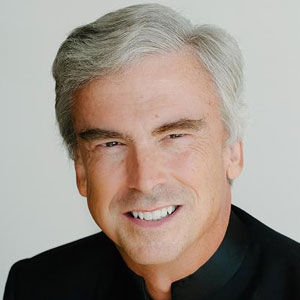
In his 31st season as Artistic Director and Conductor of the Dallas Winds, Jerry Junkin is recognized as one of the world’s most highly regarded wind conductors. He has served as Music Director and Conductor of the Hong Kong Wind Philharmonia since 2003, and Principal Guest Conductor of the Senzoku Gakuen College of Music Wind Symphony in Tokyo since 2007. Additionally, 2024-2025 marks his 36th year on the faculty of The University of Texas at Austin, where he holds the Vincent R. and Jane D. DiNino Chair for the Director of Bands. There, he also holds the title of University Distinguished Teaching Professor. Previously, he served on the faculties of both the University of Michigan and the University of South Florida. In addition to his responsibilities as Professor of Music and Conductor of the Texas Wind Ensemble, he serves as Head of the Division of Conducting and Ensembles and teaches courses in conducting and wind band literature. He is a recipient of multiple teaching awards, and students of Mr. Junkin hold major positions throughout the world.
Mr. Junkin is an enthusiastic advocate of public school music education, having conducted All-State bands and festivals in forty-eight states and on five continents. He spends his summers in residence at the Interlochen Arts Camp in Michigan, as well as appearing at major music festivals throughout the world.
Mr. Junkin has served as President of the Big XII Band Director’s Association and is a member of the Board of Directors of The John Philip Sousa Foundation, is Past-President of the American Bandmasters Association, and is Past President of the College Band Directors National Association. Regularly making guest appearances with ensembles such as the Tokyo Kosei Wind Orchestra and the Taipei Symphonic Winds, he continues to conduct throughout the United States in addition to multiple appearances in Japan, China, and Europe. In 2005, he was presented the Grainger Medallion by the International Percy Grainger Society in recognition of his championing of Grainger’s works, and he has received numerous career awards from Kappa Kappa Psi, Phi Beta Mu, and the Midwest Clinic, among others. Mr. Junkin is a Yamaha Master Educator.
Fanfare
7:15pm, Meyerson lobby
Blue-Sky Fanfare
Alex C. Ehredt
University of Texas at Arlington Wind Symphony Brass and Percussion
Dr. Christopher Evans, Conductor
Program
Rienzi: Overture
Richard Wagner, arr. Mark Hindsley
Cavalleria Rusticana: Intermezzo
Pietro Mascagni, arr. Lawrence Odom
Nabucco: Va, pensiero, sull’ali dorate
Giuseppe Verdi, arr. David Lovrien
Aïda: Triumphal March
Guiseppe Verdi, tr. Julius S. Seredy
— INTERMISSION —
La Boheme: Love Scene
Giacomo Puccini, arr. Merlin Patterson
Turandot: Nessun Dorma
Giacomo Puccini, arr. Merlin Patterson
From the Musical Les Misérables
Claude-Michel Schönberg, arr. Kazuhiro Morita
Dallas Winds Personnel
PICCOLO
Margaret Shin Fischer
FLUTE
Abby Easterling, principal
Kathy Johnson
OBOE
Nathan Ingrim, principal
Abigail Hawthorne
ENGLISH HORN
Aryn Mitchell
E♭ CLARINET
Sam Day
B♭ CLARINET
Sharon Deuby, concertmaster
Mary Druhan, associate principal
Ricky Reeves
Evan Schnurr
Jake Hale
Kristen Thompson
Andre Canabou
Ben Quarles
Mark Arritola
BASS CLARINET
Mickey Owens
CONTRA CLARINET
Robin Owens
BASSOON
Laura Bennett Cameron, principal
Marty Spake
ALTO SAXOPHONE
David Lovrien, principal
Chris Beaty
TENOR SAXOPHONE
Roy E. Allen
BARITONE SAXOPHONE
John Sweeden
TRUMPET
Tim Andersen, co-principal
James Sims, co-principal
Scott Meredith
Brian Mendez
Daniel Kelly
Shaun Abraham
Jared Broussard
HORN
Joseph Charlton, principal
Eric Hessel
Trenton Carr
Timothy Stevens
Sarrah McCoy-Black
TROMBONE
Amanda Hudson, principal
Jacob Muquiz
Josh Stout
BASS TROMBONE
Barney McCollum
EUPHONIUM
Grant Jameson, principal
Donald Bruce
TUBA
Jason Wallace, principal
Nick Beltchev
STRING BASS
Andrew Goins
HARP
Naoko Nakamura
CELESTA
Cameron Hofmann
TIMPANI & ORGAN
Jacob Hord, principal
PERCUSSION
Roland Muzquiz, principal
Michael McNicholas
Drew Lang
Brandon Kelly
Steve McDonald
Staff
Michelle E. Hall – Executive Director
Jerry Junkin – Artistic Director & Conductor
Ramon Muzquiz – Concert Operations & Stage Manager
Grace Lovrien – Executive Assistant
Todd Toney – Director of Education
Lenore Ladwig Scott – Bookkeeper
Tim Andersen – Personnel Manager
Chrystal Stevens – Music Librarian
Jeremy Kondrat – Associate Conductor
Stage Crew
Livestream Crew
Adam Ellard – Director
Savannah Ekrut – Switch, Camera
Ciara Negley – Switch, Camera
Chandler McGuire – Titles
Todd Toney – Score Reader
Christopher Cook – Remote Cameras
Don Hazen – Video Systems Engineer
Scott Probst – Recording Engineer
David Lovrien – Title Design
Meyerson Technical Staff
Gerry Guerrero – Lighting Design/Technician
Michael Marbry – Audio Technician
Evan Choate – Audio Technician
Lamar Livingston – Technical Director
Program Notes
“Overture” to Rienzi (1842)
Richard Wagner (1813-1883), transcribed by Mark Hindsley
The operatic works of Richard Wagner changed the course of music history. It’s said that all classical music written after Wagner was either emulating his style or in opposition to it. His early opera, Rienzi, from 1842, tells the story of the rise and fall of Cola di Rienzo, a 14th-century Roman politician and so-called Tribune of the Roman people.
The overture opens with a soft trumpet call that is the war call of the House of Colonna (the enemy of Rienzi). We will then hear the melody of Rienzi’s prayer from Act 5, the most well-known aria from the opera. The overture concludes with a rousing military march. The kind of storytelling through music that Wagner uses in the Overture is something that he would expand upon in his later works, where the music itself and not just the words would become integral to the plot line.
Tonight’s performance features a transcription by Mark Hindsley, the long-time director of bands at the University of Illinois, who worked tirelessly to create transcriptions of classic orchestral works to the band stage.
“Intermezzo Sinfonico” from Cavalleria Rusticana (1890)
Pietro Mascagni (1863-1945), arranged by Lawrence Odom
Pietro Mascagni is most well-known for his single-act opera Cavalleria Rusticana (Rustic Chivalry) from 1890. Bridging the gap between the giants of Verdi and Puccini, Mascagni almost single-handedly created the verismo opera style, which focused not on the powerful or the mythological but rather the lives of everyday people. The quiet and introspective Intermezzo has become one of the most widely performed parts of the opera and has been featured in multiple movies and television shows.
Tonight’s concert features an arrangement done for the U.S. Air Force Band by Lawrence Odom.
“Va, Pensiero” from Nabucco (1842)
Giuseppe Verdi (1813-1901), arranged by David Lovrien
Verdi’s Nabucco tells the story of the Babylonian king Nabucco (Nebuchadnezzar), who conquers Jerusalem and imprisons the Israelites. “Va, pensiero, sull’ali dorate” (Fly, my thoughts, on wings of gold), is also known as “Chorus of the Hebrew Slaves.”
Tonight we premiere a new arrangement by Dallas Winds Staff Arranger David Lovrien.
“Triumphal March” from Aïda (1871)
Giuseppe Verdi (1813-1901), transcribed by Julius S. Seredy
Considered the greatest Italian opera composer of the 19th Century, Verdi’s works presented opera on the grandest scale. In contrast to Mascagni’s take on the drama of the everyday, Verdi told the stories of kings, aristocrats, Biblical figures, and Shakespearean heroes.
In Aïda, we travel back to the Old Kingdom in ancient Egypt, where we focus on the forbidden love story between the enslaved Ethiopian princess, Aïda, and the captain of the royal guard, Radamès. The famous “Triumphal March” comes from Act II, where Radamès returns victorious from battle over the Ethiopians. Upon his return, the Pharaoh grants him anything that he wishes.
Love Scene from La Boheme (1896)
Giacomo Puccini (1858-1924), adapted and arranged by Merlin Patterson
Giacomo Puccini took Mascagni’s verismo style and took it to its grandest heights with works like La Boheme, Tosca, and Madama Butterfly. Curiously, Puccini and Mascagni were dorm mates for a time. While Mascagni found success first, Puccini’s success came quickly after and only grew with each passing opera. He eventually surpassed his old dorm mate to become one of the most celebrated opera composers of all time.
La Boheme, or the Bohemian Lifestyle, takes its inspiration from the 1851 book Scènes de la Vie de Boheme by Henri Murger and from Puccini’s own experiences living in poverty as a young student. Elements of La Boheme were later adapted into the hit Broadway musical Rent.
Tonight’s performance is of an adaptation by band arranger Merlin Patterson, who took elements from throughout the opera to create a tone poem based on different settings of the love theme.
“Nessun Dorma” from Turandot (1924)
Giacomo Puccini (1858-1924), arranged by Merlin Patterson
Puccini’s final opera, Turandot, was left incomplete upon his death in 1924. Because the libretto was still not finalized, the climax of the opera has become one of opera’s greatest enigmas, as no one knows what the true fate of the story would have been.
Set in China, Turandot tells the story of Prince Calaf of Tartary, who falls madly in love with the cold Princess Turandot. To win her heart, he must complete three tasks set by the Princess’ father, the Emperor. Upon the task’s completion, Princess Turandot rejects the Prince, who then offers the Princess a challenge of discovering his name by morning, or else he will die.
That night, the Prince sings a victory song declaring that he will win his challenge and claim the heart of the Princess. This song, “Nessun Dorma,” has become the highlight of the entire opera and is one of the most recognizable arias ever written. It became widely associated with the famed tenor Luciano Pavoratti who performed the notorious penultimate note of a high B with ease. Because the opera was left incomplete, we do not know the fate of the Prince and the Princess. Was his love left unrequited? Did they finally find happiness? We will never know.
Tonight we’ll hear an arrangement of “Nessun Dorma” without vocalist by Merlin Patterson.
Excerpts from Les Misérables (1980)
Claude-Michel Schönberg (b. 1944), arranged by Kazuhiro Morita
Les Misérables by Victor Hugo is widely regarded as one of the greatest novels ever written as well as being one of the longest. To condense its vast plot containing French history, thoughts on architecture and urban design, politics, religion, and a cast of numerous characters into a succinct narrative would be an almost impossible task. Yet, that is exactly what composer Claude-Michel Schönberg did in the wildly popular 1980 musical of the same name.
We follow the story of Jean Valjean from his release from prison for stealing a loaf of bread, to leading the antimonarchic uprising of 1832, to his pursuit by his former jailor, Javert.
Les Misérables straddles the fine line between opera and musical theater. Although presented as musical theater on Broadway and London’s West End, with little to no spoken dialogue, it is structurally closer to opera than most musical theater. Despite its ambiguous classification, it is one of the most popular productions of the last 40 years with numerous performances, revivals, and touring companies.
Tonight, we hear a medley by Kazuhiro Morita from Les Mis that features such favorites as “At the End of the Day,” “I Dreamed a Dream,” “One Day More,” and “Do You Hear the People Sing?”.