
EPIC VIBES
Tuesday, October 21, 2025, 7:30pm
Meyerson Symphony Center + Livestream
Jerry Junkin, Artistic Director & Conductor
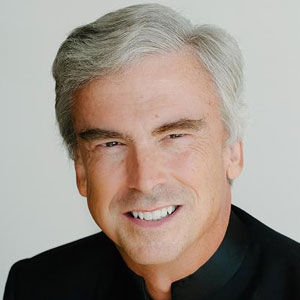
In his 31st season as Artistic Director and Conductor of the Dallas Winds, Jerry Junkin is recognized as one of the world’s most highly regarded wind conductors. He has served as Music Director and Conductor of the Hong Kong Wind Philharmonia since 2003, and Principal Guest Conductor of the Senzoku Gakuen College of Music Wind Symphony in Tokyo since 2007. Additionally, 2024-2025 marks his 36th year on the faculty of The University of Texas at Austin, where he holds the Vincent R. and Jane D. DiNino Chair for the Director of Bands. There, he also holds the title of University Distinguished Teaching Professor. Previously, he served on the faculties of both the University of Michigan and the University of South Florida. In addition to his responsibilities as Professor of Music and Conductor of the Texas Wind Ensemble, he serves as Head of the Division of Conducting and Ensembles and teaches courses in conducting and wind band literature. He is a recipient of multiple teaching awards, and students of Mr. Junkin hold major positions throughout the world.
Mr. Junkin is an enthusiastic advocate of public school music education, having conducted All-State bands and festivals in forty-eight states and on five continents. He spends his summers in residence at the Interlochen Arts Camp in Michigan, as well as appearing at major music festivals throughout the world.
Mr. Junkin has served as President of the Big XII Band Director’s Association and is a member of the Board of Directors of The John Philip Sousa Foundation, is Past-President of the American Bandmasters Association, and is Past President of the College Band Directors National Association. Regularly making guest appearances with ensembles such as the Tokyo Kosei Wind Orchestra and the Taipei Symphonic Winds, he continues to conduct throughout the United States in addition to multiple appearances in Japan, China, and Europe. In 2005, he was presented the Grainger Medallion by the International Percy Grainger Society in recognition of his championing of Grainger’s works, and he has received numerous career awards from Kappa Kappa Psi, Phi Beta Mu, and the Midwest Clinic, among others. Mr. Junkin is a Yamaha Master Educator.
Fanfare
7:15pm, Meyerson lobby
Light Rising
Ian Jones
Meadows Brass and Percussion
Brandon Aguillon, conductor
Program
Fanfare for the Maestro
Donald Grantham
The Fountains of Rome
Ottorino Respighi, tr. Fred Junkin
I. The Fountain of Valle Giulia at Dawn
II. The Triton Fountain in the Morning
III. The Trevi Fountain at Noon
IV. The Villa Medici Fountain at Sunset
Festmarsch
Richard Strauss, tr. Gottfried Veit
— INTERMISSION —
Caim
Celtic prayer for victims of the 2025 Texas Hill Country floods
John Wesley Gibson
España Rhapsody
Emmanuel Chabrier, tr. Jacco Nefs
The Wind and the Lion, Symphonic Suite
Jerry Goldsmith, arr. Michael Davis
Dallas Winds Personnel
PICCOLO
Margaret Shin Fischer
FLUTE
Jennifer McElroy, principal
Megan Pan
Julee Kim Walker
OBOE
Nathan Ingrim, principal
Abigail Hawthorne
ENGLISH HORN
Aryn Mitchell
E♭ CLARINET
Mark Arritola
B♭ CLARINET
Sharon Deuby, concertmaster
Mary Druhan, associate principal
Ricky Reeves
Evan Schnurr
Jody Webb
Andre Canabou
Michael Manning
Ayuna Sumi
Ben Quarles
BASS CLARINET
Mickey Owens
CONTRA CLARINET
Robin Owens
BASSOON
Marty Spake, principal
Spencer Wilson
ALTO SAXOPHONE
Don Fabian, principal
David Lovrien
TENOR SAXOPHONE
Roy E. Allen
BARITONE SAXOPHONE
John Sweeden
HORN
Joseph Charlton, principal
Eric Hessel
Derek J. Wright
Sarrah McCoy-Black
Trenton Carr
TRUMPET
Tim Andersen, co-principal
Forrest Albano, co-principal
James Sims
Richard Adams
Daniel Kelly
Shaun Abraham
Jared Broussard
TROMBONE
Jacob Muzquiz, principal
Austin Richardson
Megan Boutin
BASS TROMBONE
Barney McCollum
EUPHONIUM
Grant Jameson, principal
Donald Bruce
TUBA
Jason Wallace, principal
Nick Beltchev
STRING BASS
Andrew Goins
PIANO
Ishan Wang
ORGAN
Bradley Hunter Welch
HARP
Naoko Nakamura
Alison Read
TIMPANI
Jacob Hord, principal
CELESTE
Steve McDonald
PERCUSSION
Roland Muzquiz, principal
Brandon Kelly
Drew Lang
Steve McDonald
Joe Ferraro
Staff
Michelle E. Hall – Executive Director
Ramon Muzquiz – Concert Operations & Stage Manager
Grace Lovrien – Executive Assistant
Todd Toney – Director of Education
Lenore Ladwig Scott – Bookkeeper
Tim Andersen – Personnel Manager
Chrystal Stevens – Music Librarian
Jeremy Kondrat – Associate Conductor
Stage Crew
Luke Davis
Ezrie Katzen
Bob Cummins Jr.
Rhys Johnson
Box Office
Jeannie Fisher
Sarah Fisher
Kayla Shaffer
Livestream
Adam Ellard – Director
Savannah Ekrut – Switch, Camera
Lenore Ladwig Scott – Camera
Lydia Amstutz – Titles, Camera
Todd Toney – Score Reader
David Lovrien – Title Design
Christopher Cook – Remote Cameras
Don Hazen – Video Systems Engineer
Scott Probst – Recording Engineer
Meyerson Technical Staff
Gerry Guerrero – Lighting Design/Technician
Michael Marbry – Audio Technician
Evan Choate – Audio Technician
Lamar Livingston – Technical Director
Program Notes
Fanfare for the Maestro (2024) (Dallas Winds Premiere)
Donald Grantham (b. 1947)
Fanfare for the Maestro was commissioned by friends and colleagues of Jerry Junkin to celebrate his 35 years as director of bands at The University of Texas at Austin and his 30 years as music director at the Dallas Winds, and he conducted the work at its premiere. The fanfare offers two highly contrasting types of music: Florid and celebratory at the beginning and end, and a lyrical chorale in the middle. Professor Junkin excels at interpreting both styles, and this short work gave him the opportunity to display both. (It also gave me the opportunity to express my appreciation to him for his support of my work over his 35-year career.) (~ Program notes by composer)
The Fountains of Rome (1916)
Ottorino Respighi (1879-1936), transcribed by Fred Junkin
Ottorino Respighi was unusual among Italian composers of the 19th and early 20th centuries in that he is primarily known as an orchestral composer as opposed to composers like Verdi and Puccini, who are known primarily as opera composers. While Respighi did compose several operas, none have entered the standard repertoire. Where Respighi shone was in his orchestrational brilliance. The most well-known of his works is the Roman Trilogy, consisting of three tone poems: The Fountains of Rome (1916), The Pines of Rome (1924), and Roman Festivals (1928). Each of these works illustrates various aspects of Roman life, culture, and history.
The Fountains of Rome takes the listeners on a journey, from dawn to dusk, to four of the most famous fountains in the city.
- The Fountain of Valle Giulia at Dawn – This pastoral setting opens peacefully as the first rays of light emerge over the Villa Borghese, large gardens dating back to the 1600s. This is also the same place where Respighi starts his journey in The Pines of Rome.
- The Triton Fountain in the Morning – From Valle Guilia, we travel a short way south to the Triton Fountain of Baroque sculptor Gian Lorenzo Bernini. Here, we hear the joyful sounds of naiads and the blowing of Triton’s conch, all while the cascading water of the fountain splashes about.
- The Trevi Fountain at Noon – At noon, we arrive at the most famous fountain in Rome, the Trevi Fountain (perhaps the most famous fountain in the world). Standing in the center of the fountain is the Titan Oceanus, guided by Triton from the previous fountain. Here, we hear the full splendor of Greco-Roman antiquity, the Italian Baroque, and modern Rome all mixed into a triumphant paean.
- The Villa Medici Fountain at Sunset – As the sun goes down over Rome, we return to the Villa Borghese, where we find the Villa Medici, home of one of the most powerful families in Roman history. The music becomes melancholic and introspective. Bells toll to signal the end of the day as night finally descends.
Tonight’s performance is a transcription by Fred Junkin (the father of our conductor, Jerry Junkin) and features the Lay Family Organ. This transcription was done in 1977 for the Victoria High School band, where Junkin was the long-time conductor. Over the years, this has become a Dallas Winds favorite with multiple performances since it was first heard 13 years ago.
Festmarsch (1888)
Richard Strauss (1864–1949), arr. Gottfried Veit
Richard Strauss achieved his fame primarily through his 16 operas, his 9 symphonic poems, but also through his almost 100 songs. What makes Richard Strauss particularly likeable is the fact that throughout his life he was never above composing ‘occasional’ works. A particularly impressive composition in this genre is his ‘Festmarsch’, which he wrote at the age of twenty-four and dedicated to the Munich orchestra association ‘Wilde Gungl’. At that time, his father Franz Strauss was the conductor of this orchestra. Thanks to the cooperation of this orchestra, the Italian arranger Gottfried Veit now had this score at his disposal and used it for a transcription of the ‘Festmarsch’ for Symphonic Band.
España Rhapsody (1883)
Emmanuel Chabrier (1841–1984), transcribed by Jacco Nefs
Emmanuel Chabrier was one of the few one-hit-wonders in the classical music world, along with his contemporary, Paul Dukas (The Sorcerer’s Apprentice). Chabrier was a bit of an outsider in the Parisian music scene due to his lack of formal training. Unlike his colleagues, he held a decidedly non-musical career. After obtaining a law degree, he held a position within the French Ministry of the Interior for nineteen years. Aside from España, he is only known for a handful of operas, some songs and piano works, and a couple of other orchestral works.
España Rhapsody (originally entitled “Jota”) draws its inspiration from Chabrier’s tour of Spain during the second half of 1882. Despite being a neighboring country to his home in France, Spain was seen as an exotic locale and was one that enthralled many artists of the era. Composers like Rimsky-Korsakov (Capriccio Espagnol from 1887), Debussy (Ibéria from Images from 1905-1908), and Ravel (Rhapsodie Espagnole from 1907/1908 and Boléro from 1928) would all take some inspiration from Chabrier’s work. Throughout the piece, we hear exotic rhythms, evoked guitar strumming, and lively dance melodies. Many of the characteristics that we associate with Spanish music are a direct result of centuries of Moorish occupation. Instruments like castanets, tambourine, and even the guitar can be traced back to Arabic roots. All these sounds are featured throughout Chabrier’s brief Spanish tone poem.
At the time of its premiere, it was hailed as a masterpiece. In many ways, it was the prototype for French impressionistic music that would emerge in the following years. Gustav Mahler called it “the start of modern music.” Chabrier himself simply said it’s “a piece about F major, and nothing else.”
The Wind and the Lion Symphonic Suite (1975)
Jerry Goldsmith (1929–2004), arr. Michael Davis
Jerry Goldsmith was one of the most revered composers for the silver screen. In a career spanning over 50 years with over 200 film scores to his name, his music is some of the most well-known and widely heard music of the last century. He is remembered for his scores to five Star Trek films, Planet of the Apes, Alien, and the Universal Studios Fanfare, among many others.
– program notes by Bret Newton –